Blog


Why Pregnancy Gum Health Matters
Are you pregnant or planning to have a baby? If you are, taking care of your oral health — especially your pregnancy gum health — is more important than ever. Pregnant women are at higher risk of gum disease, and although it’s a common, easily treated condition, it can have serious consequences. Gum disease has been linked to premature births and low birth weights.
Our oral hygiene advisor Dirna Grobbelaar and periodontist Dr Corlene Schnetler have put together expert advice to keep your gums ‘in the pink’ before and during pregnancy.
“Being pregnant does not cause gum disease, but the increase in hormones can make you more susceptible to it,” explains Dr Schnetler. “Meticulous oral hygiene is the most effective way to prevent it as you can’t have gum disease without dental plaque being present.”
When to Visit the Oral Hygienist
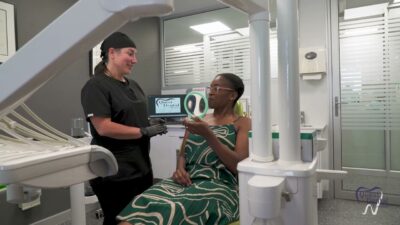
If possible, go for a professional clean to remove plaque and tartar before falling pregnant. But if you are already pregnant it is still safe to do so. “Visiting an oral hygienist during pregnancy is important for the prevention of gum disease. The ideal time is during the second trimester,” advises Dr Schnetler. Look for a practice that offers EMS Guided Biofilm Therapy®, an innovative, extra-gentle oral hygiene treatment. During pregnancy, it’s your daily routine that matters most for proper pregnancy gum health. “If you follow a proper daily oral hygiene routine at home you should be able to keep your gums healthy,” says Dr Schnetler. “This includes brushing your teeth twice a day, flossing once a day, brushing your tongue daily and using a mouthwash. It’s important to use the correct tools and techniques.” It’s quite common to notice a little bleeding when you brush or floss if you’re pregnant. Don’t ignore it, as bleeding gums are the most noticeable sign of gum disease. Talk to your dental professional, or follow an extra careful oral hygiene routine at home for a week and see if it resolves.
“Brush correctly twice a day with a very soft-bristled brush like GUM Sonic Sensitive, ideally using an antibacterial toothpaste like GUM Paroex Intensive Action. Clean between the teeth daily, using whatever interdental tool you find easiest – floss, an interdental brush or even Soft-Picks,” says Grobbelaar.
“After eating and before bed, rinse with salt water or an antibacterial mouth rinse like GUM Paroex, which contains chlorhexidine and CPC, the gold standard in plaque control.”
If your gums continue to bleed after 7 days, it’s important to see your dentist or oral hygienist to protect your pregnancy gum health. Don’t ignore your oral care, even if you’re experiencing morning sickness.
“If toothpaste makes you feel nauseous when you brush, try dipping your brush in an antibacterial mouth rinse instead of using toothpaste,” recommends Grobbelaar.
If you are sick, it’s also important not to brush immediately afterwards, as the acid present softens tooth enamel, which can impact your pregnancy gum health. “Simply rinse with water or an alcohol-free mouthwash like GUM Paroex or Dentyl Active after vomiting and wait an hour before brushing the teeth.”
Hormonal changes during pregnancy can trigger mouth ulcers. Read this article for expert advice if you experience mouth ulcers.
Taking care of your oral health during pregnancy is important for both of you. “The healthier your mouth, the fewer bacteria are in your bloodstream and the better for your baby,” says Grobbelaar.
For further guidance on maintaining pregnancy gum health, speak to your dentist or oral hygienist.
- Ultra-soft-bristled sonic toothbrush – GUM Sonic Sensitive battery brush or GUM Technique
- Antibacterial toothpaste – GUM Paroex Intensive Action Toothpaste
- Interdental brushes – GUM Trav-ler, GUM Bi-Direction or GUM Soft-Picks
- Antibacterial mouthrinse – GUM Paroex Maintenance Mouthrinse or Dentyl Active
Sign up for Ivohealth News
Want more expert tips on pregnancy gum health, oral care advice, news, and competitions? Join 1,500+ people and subscribe to our monthly Ivohealth News.