Blog


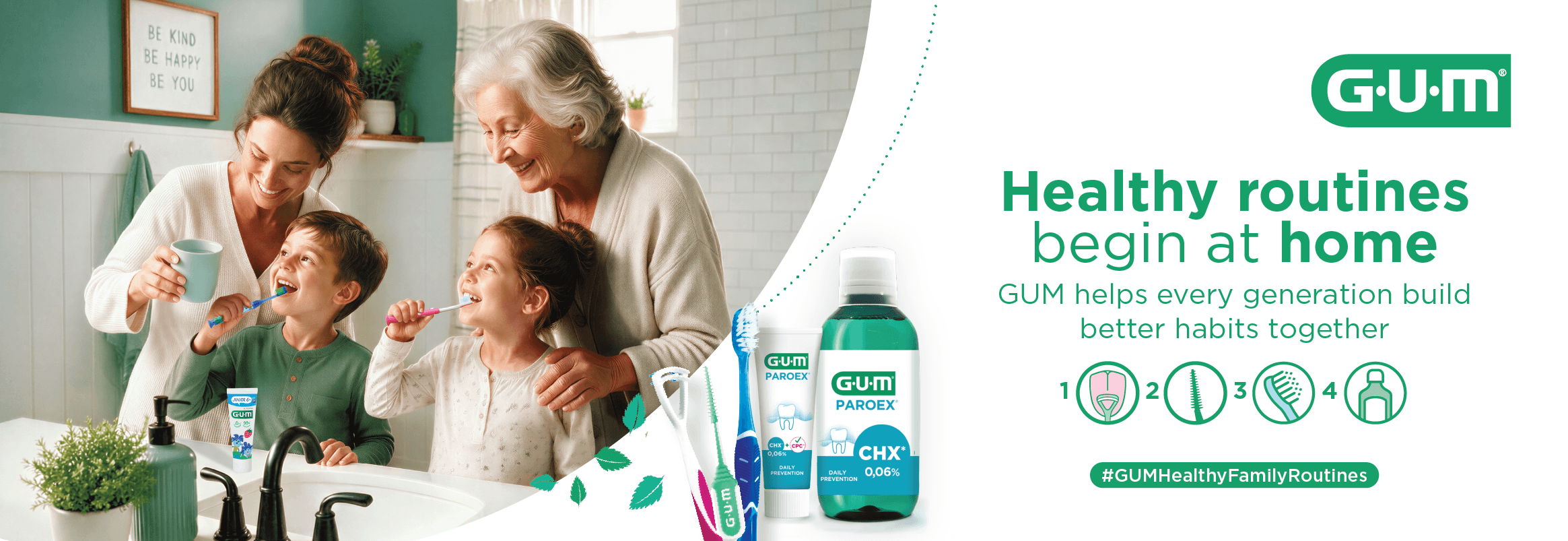
Oral care in a busy household – Brushing teeth can become another task to tick off before leaving for school or switching off the lights before bed. Everyone has a toothbrush, everyone knows they should brush twice a day and it’s easy to assume the basics are covered.
But the habits we repeat without thinking are often the ones worth checking. Your child may need help reaching their back teeth, your teenager’s braces may require more careful cleaning or an older relative may be putting up with a dry mouth they haven’t wanted to mention.
With oral care guidance from Dirna Grobbelaar, Ivohealth’s Oral Hygiene Advisor and GUM spokesperson, here are seven common mistakes to look out for and simple changes to help your family care for their oral care and health.
1) Letting the morning rush cut brushing short

How long do you actually brush for? Without a timer, two minutes can be difficult to judge, especially when someone is calling from the car or you’re already thinking about the day ahead.
Try timing your brushing for a few days. You may discover that what feels like two minutes is much shorter. A timer or a toothbrush with one built in can help you keep track, morning and night.
Use that time to work around your mouth, giving attention to the inner, outer and chewing surfaces of your teeth. The aim is to clean thoroughly, rather than spend longer brushing the same easy-to-reach spots.
2) Putting too much pressure on your toothbrush
It can be tempting to give your teeth a vigorous scrub, particularly when they don’t feel clean. But pressing harder can irritate gums and wear down enamel.
A soft toothbrush and a gentle technique are a better approach. Angle the bristles towards the gumline and use small movements to clean each tooth.
This is also a useful habit to demonstrate to children: careful brushing doesn’t need force behind it.
3) Finishing after brushing alone
The spaces between teeth are easy to forget because you can’t always see what’s left behind. Yet a toothbrush cannot reach every surface, allowing food and plaque to remain in those gaps.
Cleaning between teeth deserves a place in your daily care alongside brushing. Depending on your needs, floss or an interdental tool such as GUM Soft-Picks PRO can help reach these areas.
Children may need help with this too, particularly as permanent teeth come in and sit closer together. If you’re unsure which tool is suitable or how to use it, ask your dentist or oral hygienist for a demonstration.

4) Handing over brushing before your child is ready
Wanting to do everything independently is part of growing up. But a child who can hold a toothbrush and follow the motions may still miss areas of their mouth.
Grobbelaar recommends helping with brushing until around the ages of eight to 10. A practical way to balance independence with support is to let your child brush in the morning, then brush their teeth for them before bed.
Treat this as a chance to teach rather than simply take over. Showing them how to reach different areas can help build the skills they’ll need to brush well on their own.

5) Expecting the same approach to work with braces
Getting braces means adjusting more than what’s on your plate. Brackets and wires create extra places for plaque to collect, so cleaning needs more attention too.
A quick brush around the front of the teeth can leave areas around the braces untouched. Cleaning between teeth may also feel awkward at first, making it tempting to skip.
Tools designed for braces can make this easier. GUM Ortho Floss threads around the wires to help clean between teeth. Ask your teenager’s oral hygienist or orthodontist to show them how to use it, so they leave with a technique they can practise at home.
6) Washing away the fluoride after brushing
If you grew up rinsing your mouth with water after brushing, it probably feels like the natural way to finish. But that final rinse washes away much of the fluoride your toothpaste leaves behind.
Try changing the order: clean your tongue and between your teeth first, then brush with a fluoride toothpaste such as GUM Bio Toothpaste. Spit out the excess toothpaste when you’re done, without rinsing with water.
This small change gives the fluoride more time in contact with your teeth.

7) Dismissing a dry mouth as part of getting older
An older family member may mention a dry mouth in passing, without realising it’s worth discussing with an oral care professional.
Saliva helps protect teeth and clear away food particles, so ongoing dryness deserves attention. Grobbelaar often sees this in older patients, sometimes as a side effect of medication.
Encourage your relatives to raise it with their dentist or oral hygienist, rather than simply putting up with the discomfort, they can get advice on what may be contributing to it and how to manage it.

A little attention can make a difference
A family oral care check doesn’t need to become another big task. Start with one habit: time your brushing, help your child before bed or make space for cleaning between teeth. Regular dental or oral hygiene visits can help you check that your approach is working for each individual in the family.
“The aim isn’t to give everyone in the family the same routine. It’s to notice where each person needs a little more help and make those changes part of their daily care,” says Grobbelaar.
For help finding an approach suited to you, answer four quick questions using Ivohealth’s GUM Routine Builder.