Interdental Cleaning

An effective oral care routine includes cleaning in-between teeth every day – with floss, an interdental brush or dental pick. Cleaning between the teeth is essential for fresh breath and a healthy mouth.

Here’s expert advice to help you find the best interdental tools, even if you have orthodontic braces, a bridge, crown or implants. If you want to floss like a boss, read on.

Index

Reviewed by
Dirna Grobbelaar, Oral Hygiene Advisor
Updated on January 17, 2024

When it comes to good oral hygiene, you may think that brushing and using mouth rinse gets the job done. But teeth have five sides, brushing only cleans three. Cleaning in-between the teeth is vital – to remove food particles and bacteria that get ‘trapped’ in the interdental spaces between your teeth.

If you don’t clean between your teeth you are not alone. Research indicates only a third of South Africans floss or clean in-between regularly.

Here’s expert advice to help you floss like a boss and maintain a healthy mouth and fresh breath.

4 Reasons to clean between the teeth

1) Healthy gums: if not removed, plaque can build up between the teeth and irritate the gums, eventually causing gum disease. If your gums bleed when you floss, you may already have gum disease. This means it’s more important than ever to clean your teeth and gums correctly. And if you do have bleeding gums it’s probably a good idea to see your dental professional.

2) Fresh breath: for a truly clean mouth you have to ace that space. If you don’t remove plaque and food debris between the teeth, they can cause bad breath (aka halitosis). Want proof? Pull a piece of dental floss between two teeth at the back of your mouth, then sniff the floss. If you don’t usually clean in-between, it won’t smell very good – just like your breath.

3) Cavity protection: dental professionals say that most decay begins between the teeth. Cleaning the interproximal spaces between your teeth helps prevent cavities and tooth decay.

4) Better health: poor oral health has been linked to many serious diseases including diabetes, heart disease, pre-term and low-birthweight babies. Taking good care of your mouth is good for your whole body health.

Do you need to clean between your teeth

Yes. If you want a healthy mouth and fresh breath you do need to clean between your teeth. Dental professionals recommend cleaning in-between the teeth every day as part of an effective oral hygiene routine. For healthy smiles think 1, 2, 3 – brush correctly twice a day, clean in-between once a day and rinse for extra fresh breath confidence.

Children should clean in-between once their teeth begin to touch one another. This is often around the time their permanent teeth appear. Flossing can be a little awkward for younger children, but there are a variety of interdental tools that are easier to handle, such as Sunstar GUM Easy-Flossers that have floss on a tiny handle. By starting young you will help your children develop good oral care habits for life.

Braces, bridges or implants? If you have bridges, implants or orthodontic braces, cleaning correctly maybe a little more difficult, but it is extremely important. With the correct interproximal tools, it will be easier. Sunstar GUM has excellent options, particularly for people with braces, bridges and implants. Here’s a 45-second video demonstrating how to clean orthodontic braces correctly.

Interdental Cleaning | floss

4 Easy ways to clean between your teeth

If you are not comfortable about flossing, don’t despair. With the right tools, cleaning in-between will be quick and easy, and efficiently remove plaque and food debris stuck in-between your teeth.

There is a wide variety of interdental tools available these days, sold at dentists, pharmacies and even the local supermarket. You’re bound to find something you fall in love with. Whether you floss like a boss, love the rush of an interdental brush or enjoy a quick pick.

If you’re not confident which size or type of interdental tool is right for your mouth, ask your dentist or oral hygienist – they will be very happy to help guide you on your interdental journey.

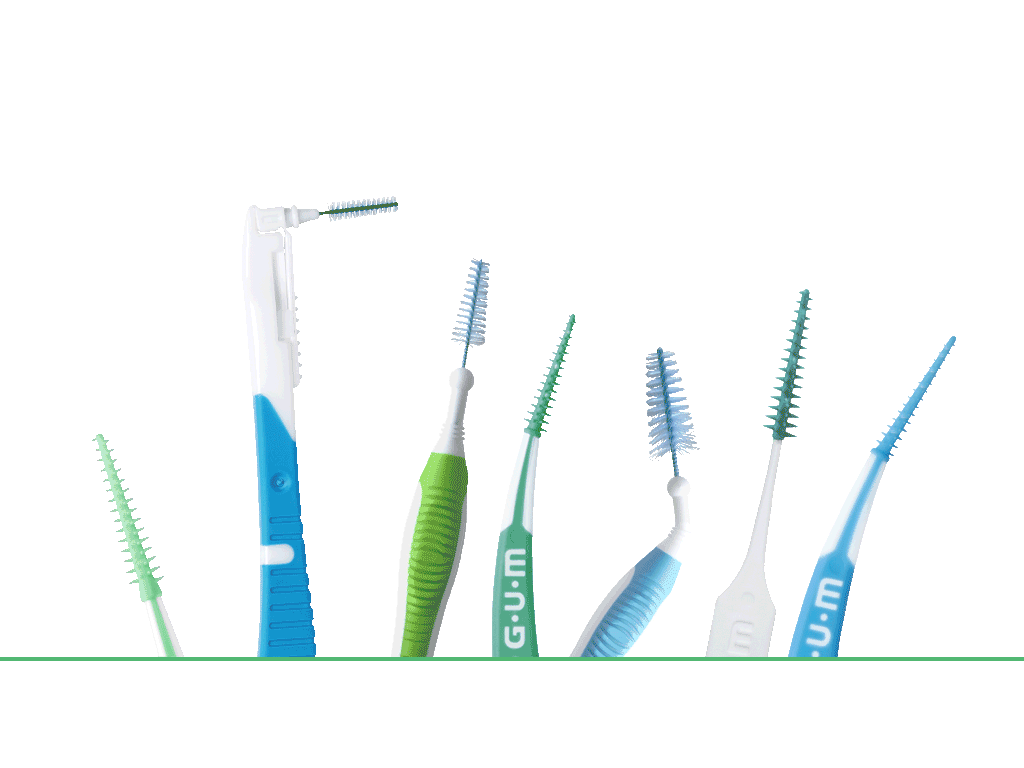
There are 4 main types of floss and interdental tools for cleaning in-between teeth:

  1. Interdental brushes
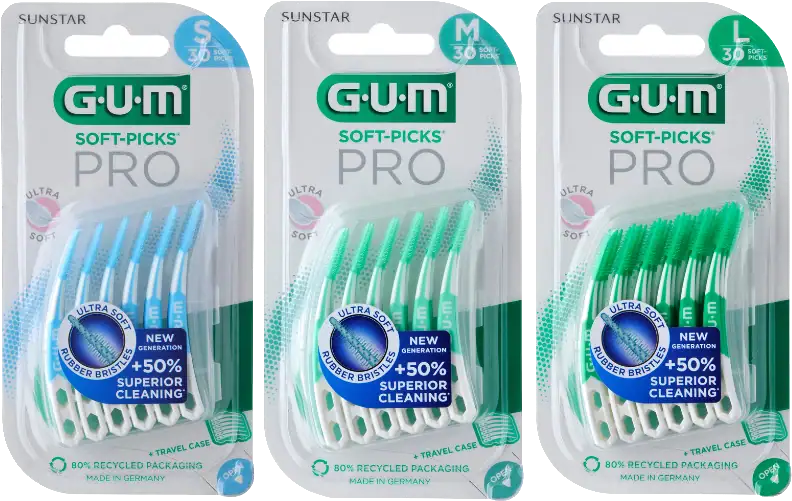
  2. Interdental picks
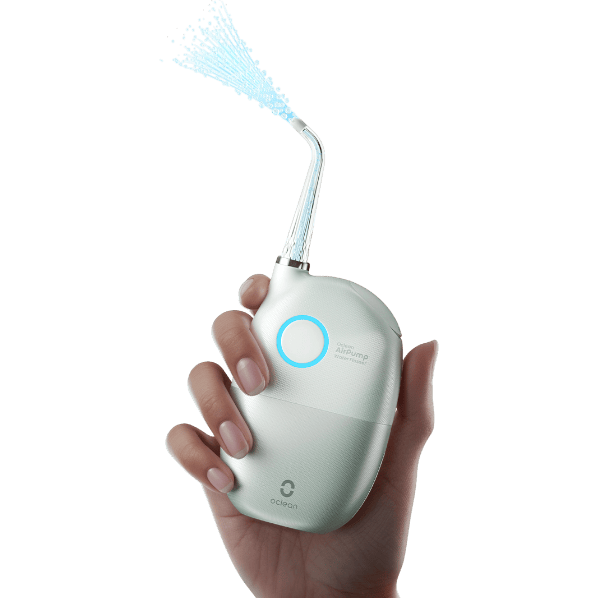
  3. Oral irrigators
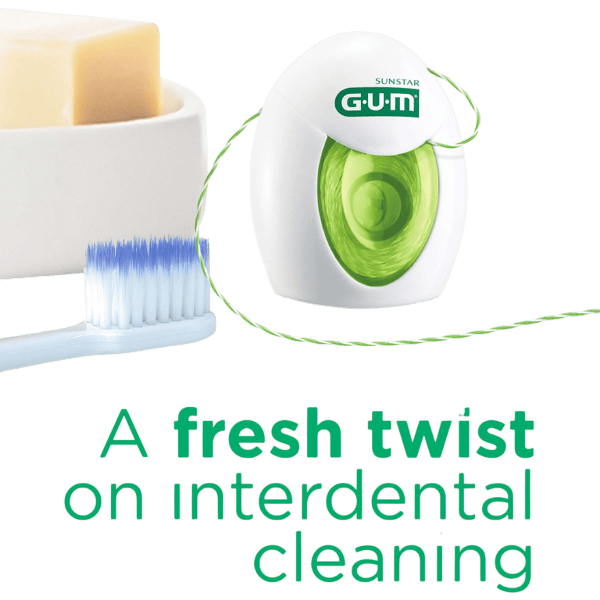
  4. Floss – traditional string floss and floss on handles

The best tools - interdental cleaning

Choosing the right toothbrush isn’t just about price or brand – it’s about finding the right fit for your mouth and needs. Here’s what makes a difference:

Interdental or interproximal brushes and small brushes are designed specifically to clean in-between the teeth and around orthodontic braces, bridges and implants. They are effective at removing plaque and food debris and easier to use than floss.
Interdental brushes are ideal for people with wider space between the teeth, food traps (i.e large space between teeth where food becomes trapped) and people with braces.
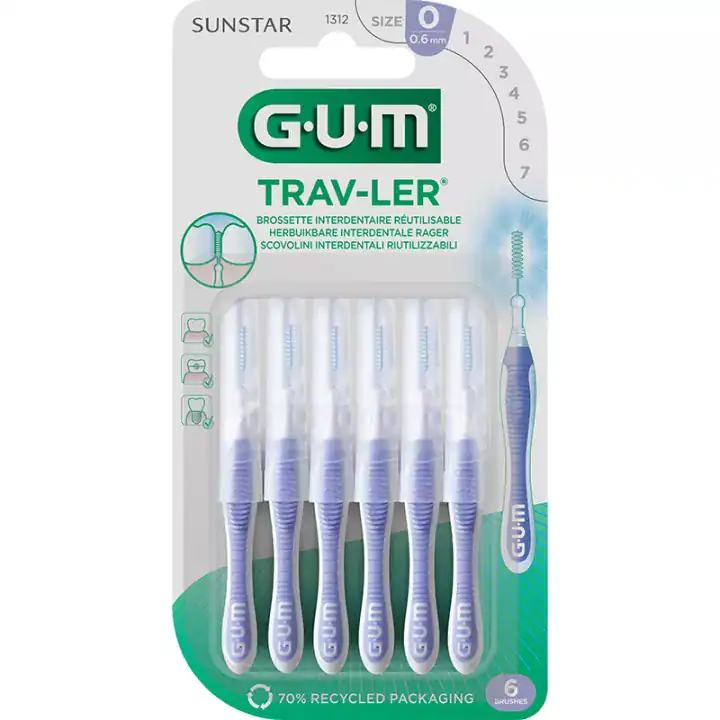
For best results and to prevent damaging the teeth or gums, ideally use interdental brushes that have antibacterial bristles and coated wire. For example, Sunstar GUM Trav-ler interdental brushes are flexible interdental brushes in 9 different sizes. Sunstar GUM Bi-Direction has a unique bendable head which allows you to reach even the trickiest, most hard-to-reach spaces.
WATCH: tools for cleaning in between teeth video.

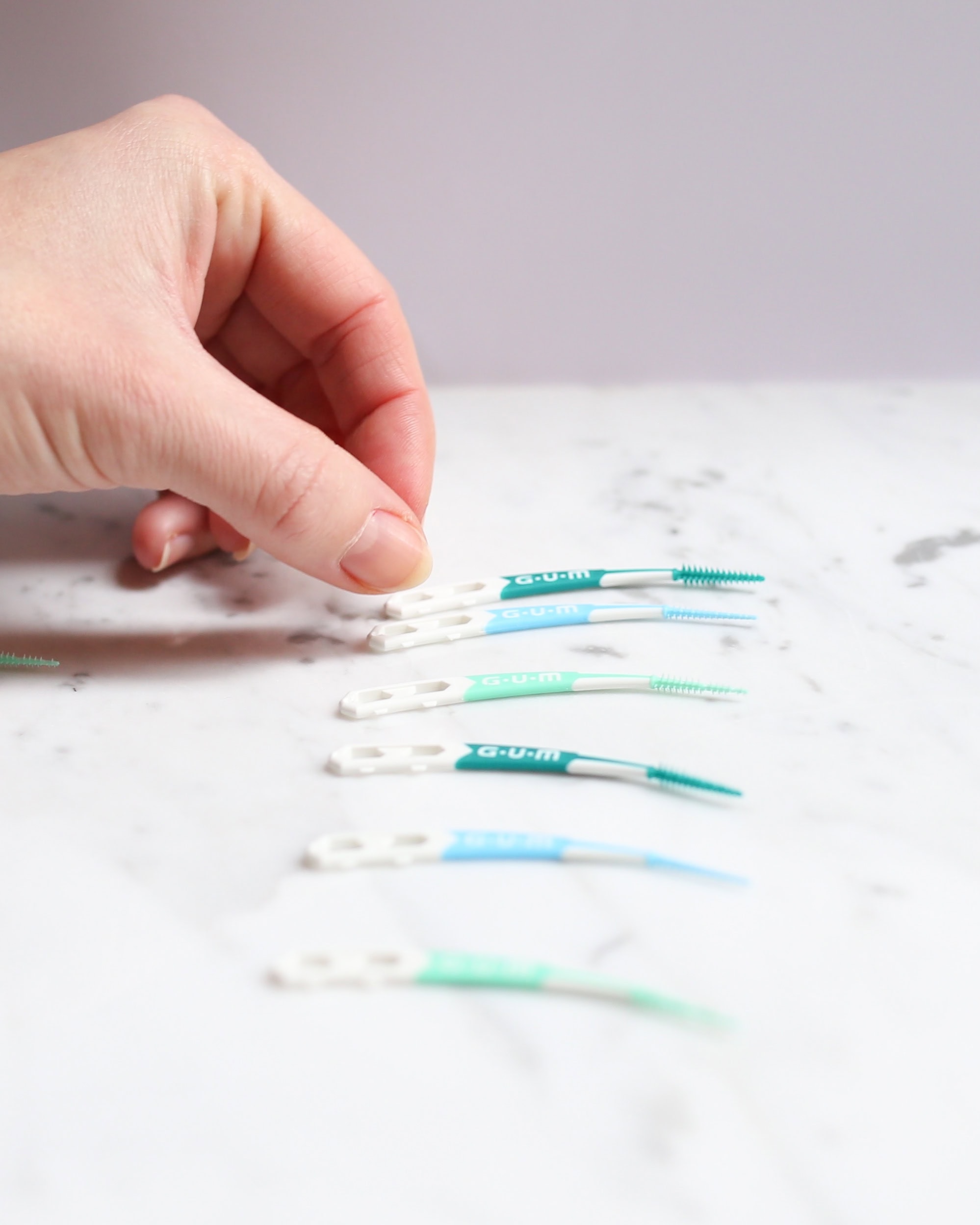
Traditional wooden toothpicks are still popular tools for removing trapped food, but they are not particularly effective at removing plaque and can cause gum recession if used over a long period of time. These days there are high-tech versions available like Sunstar GUM Soft-Picks which are flexible and have tapered rubber bristles to clean in-between more effectively.
WATCH: tools for cleaning in between teeth video

Floss and interdental brushes mechanically remove plaque as they scrub or scrape the surface of the tooth. Oral irrigators, use water and even air, to clean. Whilst not as effective as mechanical plaque removal, they are easy to use and a good option for anyone who won’t manage daily flossing or cleaning in-between with an interdental brush or pick.
They are helpful for children with braces and cleaning implants. Look for the Panasonic Oral Irrigator which uses water or to clean in between.

If you’re in the habit of flossing and doing it correctly, carry on flossing. It is a very effective way to clean plaque and food particles from between the teeth and below the gum line. According to oral hygienist Dirna Grobbelaar, less than half of patients who floss regularly do it correctly. Check if your technique is spot-on by watching this video or asking your dentist or oral hygienist.

If you have teeth that are close together, misaligned or overlapping, traditional string floss may be the only or best option. You’ll struggle to fit an interdental brush or toothpick between your teeth.
WATCH: how to floss video

If you have orthodontic braces use GUM Ortho Floss with floss threader. It will take time, but is a very effective way to clean your braces thoroughly. You will get quicker with practice.
WATCH: how to floss braces video

For people with bridges or implants try GUM Access Floss.
WATCH: how to floss bridges video
WATCH: how to floss implants video

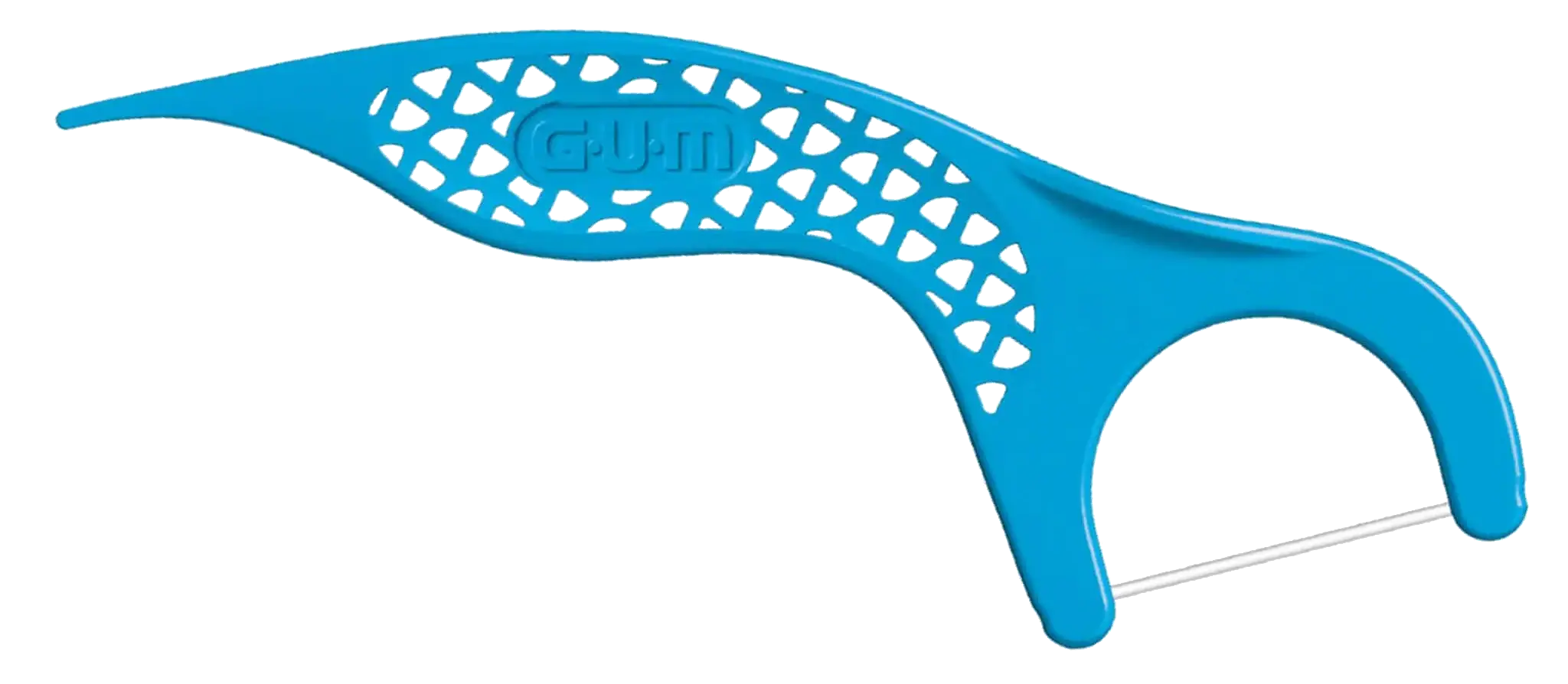
If you find it difficult to floss correctly, or manage floss around your fingers, try floss on a handle. Children and people with limited dexterity (eg. from arthritis) will find tool Sunstar GUM Easy Flossers much easier to use.
WATCH: tools for flossing video

Which floss is better for you

Whether you have tight interdental spaces, bridges, braces, implants, sensitive gums, or even limited dexterity, GUM has a top-quality dental floss for you.

You can choose a flavoured floss, one that expands during use so it’s easy to insert and even floss handles to use on the go. Use this chart to find your ideal flossing partner.

Which is your ideal dental floss?

You’ll find GUM floss at selected Clicks, Dis-Chem, pharmacies and dental practices.
Click below for stockists and more product details.

How to floss like a boss

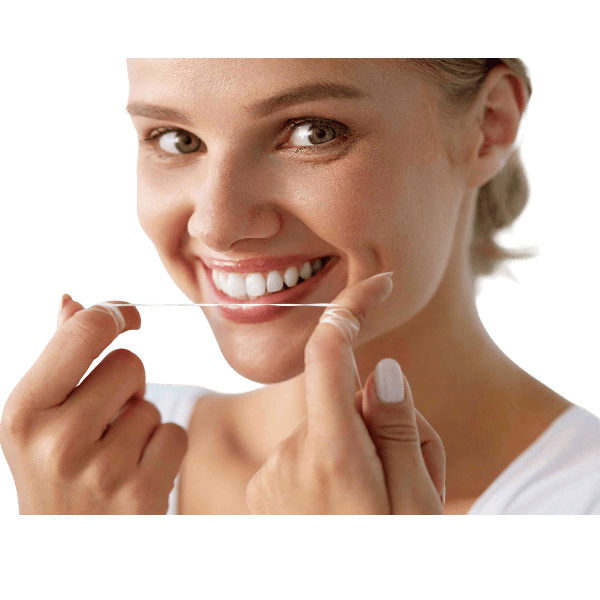
Traditional floss is a popular and effective way to clean in-between when used correctly. Unfortunately, experts say that most people don’t have a good flossing technique.

Here’s how to ‘floss like a boss’ for a clean, fresh, healthy mouth:

  1. Take about 30cm of floss
  2. Wind the floss around your middle fingers
  3. Hold the floss between your thumbs and index fingers
  4. Slide the floss in-between teeth using a gentle back-and-forth sawing action
  5. Fold floss around the side of a tooth in a C-shape
  6. Slide the floss up and down, against tooth and just under the gum line
  7. Repeat on the neighbouring tooth
  8. Pull out and repeat using a clean section of the floss

This 45-second video demonstrated correct flossing technique – is this how you’ve been doing it?  If floss isn’t the best option for you, don’t worry, there are other interdental options.

The best time to clean between the teeth

According to dental professionals, it doesn’t matter if you clean in-between in the morning or night. The main thing is that you do it – choose a time that suits you best. With the correct tools, it will only take a minute or two to ace that space.

Brush or floss first? The jury is out and it doesn’t seem to matter. In the 2019 Oral Health Routine Survey of 222 South African dental professionals, about half said brush first and the other half said floss. What they did agree on unanimously is that patients should clean in-between every day.

Oral care tip: floss first and you’ll see the evidence of what’s removed more easily. This will encourage you to continue to clean in-between.

Cleaning orthodontic braces

If you wear orthodontic braces, cleaning the teeth is more complicated, including cleaning in-between the teeth. As well as cleaning all 5 sides of each tooth (front, back, top and sides) you also need to clean around the brackets and wires.

Using the right tools will make cleaning orthodontics quicker and easier.
WATCH: how to floss braces video.

For expert advice read our guide to orthodontic braces.

Flossing fact and fiction

  • You don’t need to floss or clean in-between if you see the oral hygienist regularly – FALSE
  • Everybody should floss or clean in-between – TRUE
  • Kids don’t need to floss – FALSE
  • You shouldn’t floss if your gums bleed – FALSE
  • If you have large hands or fingers you won’t be able to floss – FALSE
  • Floss should be held between the thumb and index finger – FALSE
  • Floss should be held between the middle fingers – TRUE
  • One size fits all – FALSE
  • My teeth are too close together so I don’t need to clean in-between – FALSE
woman looking in the mirror, flossing. floss like a boss.

How to fix interdental issues

  1. Problem: Flossing is too awkward
    Solution: use floss on a handle, interdental brushes or an oral irrigator
  2. Problem: I don’t have time to clean in-between
    Solution: using the right tools makes correct cleaning in-between, quick and easy
  3. Problem: I forget to clean in-between
    Solution: do it at the same time each day as part of your daily oral care routine
  4. Problem: My gums bleed
    Solution: See your dental professional for a check-up and professional clean then maintain a meticulous oral care routine

For a monthly dose of expert oral care advice, plus exclusive offers and the chance to win exciting prizes, subscribe to Ivohealth News here.

The information provided on this website is intended for general informational purposes only. It should not be construed as medical advice or used as a substitute for professional medical diagnosis or treatment. Always seek the advice of your dentist, oral hygienist or another healthcare provider regarding your oral health or other medical conditions. Reliance on information provided on this website is solely at your own risk.